
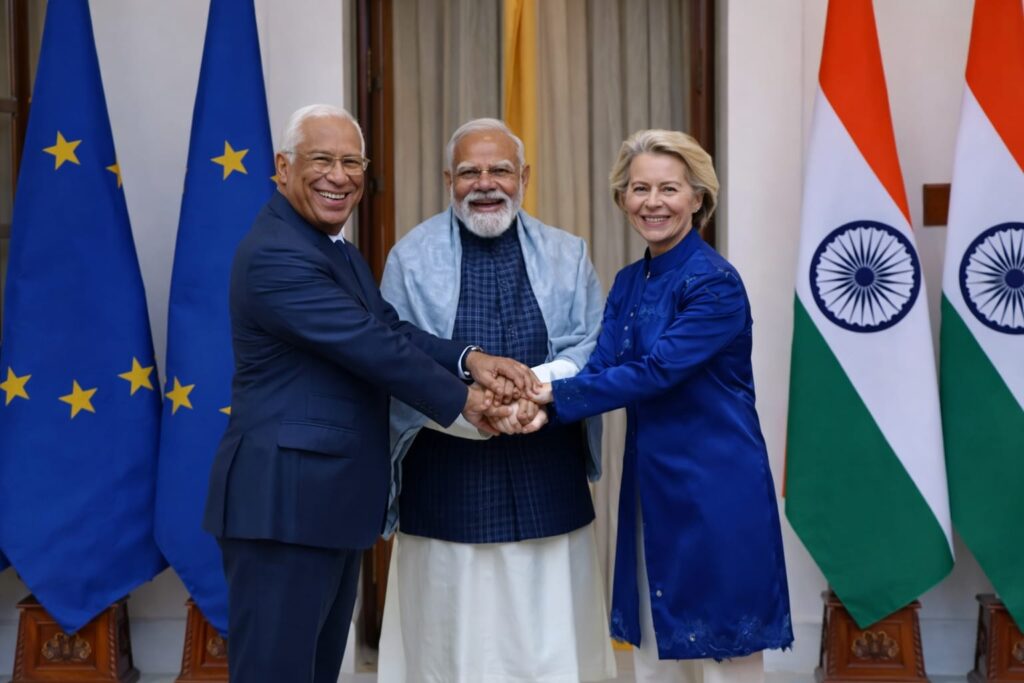
India and the European Union are moving closer to one of the most ambitious trade agreements in recent years, often described by officials as the “mother of all deals”. While negotiations are still developing, early indications from the EU suggest a dramatic reduction in import duties on many European products entering the Indian market. If finalized, the agreement could reshape consumer prices, trade relations and long-term economic cooperation between the two sides.
A Turning Point in India–EU Trade Relations
India and the EU have been strategic partners since 2004, but trade talks are often stalled due to differences over tariffs, market access and regulatory standards. The current proposal signals a clear change in approach, focusing on deeper economic integration rather than limited regional cooperation.
According to European officials, India has shown willingness to sharply reduce import duties in several categories, which will make European goods more competitive in the Indian market. In return, India hopes to get better access to EU markets for its pharmaceuticals, textiles, IT services and skilled professionals.
Big Tariff Cuts: What Gets Cheaper?
One of the most eye-catching aspects of the proposed deal is the scale of tariff reduction.
Automobiles
Import duties on European cars could be reduced from around 110% to around 10%. If implemented, this will significantly reduce prices of premium European vehicles in India. While these cars may still remain aspirational for many consumers, the move could increase competition in India’s automobile sector and encourage technology transfer, especially in electric and hybrid vehicles.
Alcoholic beverages
Duties on wine are expected to be reduced from around 150% to around 20%, while duties on spirits and beer will also be reduced. This can make European wines and premium liquors more affordable for Indian consumers and expand the hospitality and tourism ecosystem. However, states may still impose local taxes, which will affect final prices.
processed foods
One of the most consumer-friendly changes is the proposed elimination of tariffs on processed foods. This may include things like chocolate, cheese, packaged foods and ready-to-eat products. Lower prices could increase product variety in Indian supermarkets while motivating domestic producers to improve quality and packaging standards.
Fruits and Agricultural Products
Duties on products like kiwis and pears are expected to be reduced, while tariffs on fruit juices and vegetable oils may be eliminated entirely. This could stabilize prices during off-season periods and reduce dependence on limited supply chains, benefiting urban consumers in particular.
How Indian Consumers May Benefit
For Indian consumers, the most visible impact will likely be more choice at lower prices. Imported products that were once considered luxury items may become more accessible to the upper-middle class. Increasing competition may also force domestic brands to innovate, improve efficiency and keep prices competitive.
In the long run, exposure to European quality standards may improve food safety norms, sustainability practices and manufacturing benchmarks in India.
Concerns for Domestic Industry
Despite the potential benefits, the deal has raised concerns among Indian manufacturers and farmers. Domestic automobile makers, food processors and small producers fear being undercut by established European brands with advanced technology and strong global supply chains.
To address this, policymakers can adopt phased tariff reductions, safeguard clauses and support schemes for small and medium enterprises. Balancing consumer benefits with domestic industry protection will be critical to the success of the deal.
Strategic and Geopolitical Importance
Beyond prices and products, this agreement holds strong strategic value. At a time when global supply chains are being restructured and trade tensions are rising, closer India-EU cooperation can reduce excessive dependence on any one market.
For India, the deal supports its goal of becoming a global manufacturing hub while maintaining strategic autonomy. For the EU, India represents a fast-growing market with a young population and long-term consumption potential.
What Happens Next?
While headlines have highlighted dramatic tariff cuts, the agreement has not yet been finalized. Negotiations will continue on labor standards, environmental commitments, data protection and dispute resolution mechanisms. Any final deal will require political consensus on both sides.
If successfully concluded, the India-EU trade agreement could be a watershed moment – reshaping not only purchase bills but also India’s role in global trade.
Conclusion
The so-called “mother of all deals” between India and the EU has the potential to make cars, wines, processed foods and select agricultural products cheaper in India. More importantly, it signals a broader shift towards deeper economic cooperation, consumer preferences and strategic alignment. Although challenges remain, the deal could mark the beginning of a new chapter in India-EU relations – driven by trade, trust and long-term growth.
Description;India and the European Union are negotiating a landmark trade agreement that could sharply reduce import tariffs on cars, wines, processed foods, and fruits, reshaping consumer prices and long-term India–EU economic ties.