
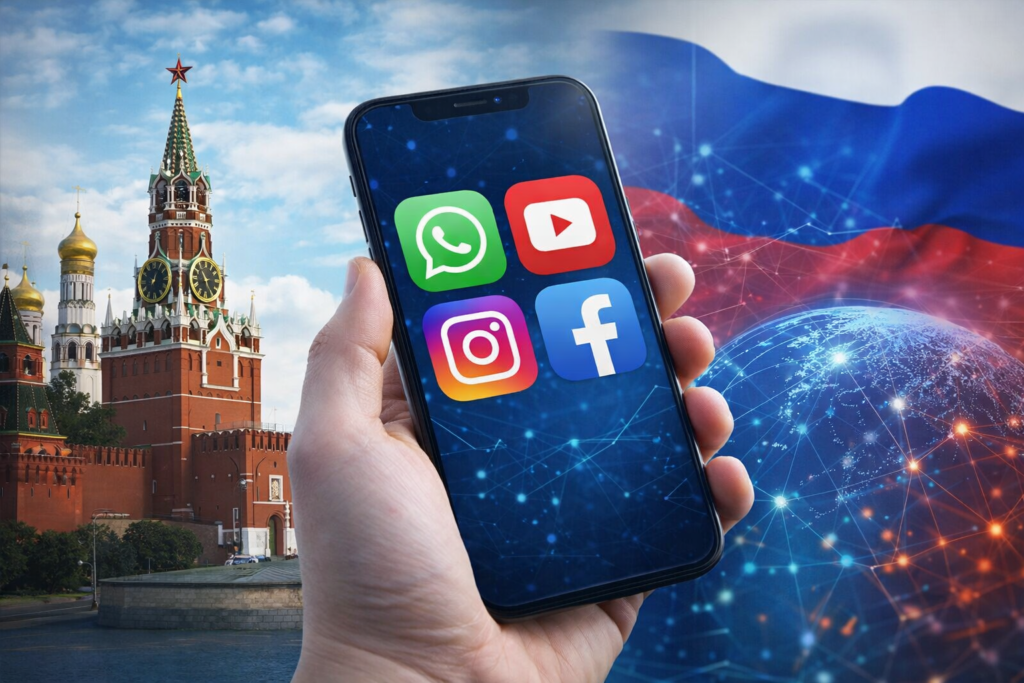
In a significant move impacting the country’s digital landscape, Russia has expanded restrictions on several major international social media platforms, including Instagram, Facebook and other global communications services. The development marks another chapter in the ongoing evolution of Russia’s internet regulations and its broader approach to digital sovereignty.
Over the past few years, Russia has introduced several laws aimed at increasing state surveillance of online content. Officials have repeatedly cited concerns over national security, misinformation and foreign influence as reasons for tightening the rules. The latest measures appear to reinforce these long-term objectives, limiting access to some international platforms within the country.
A Shift Toward Greater Digital Control
Russia’s approach to Internet governance has gradually shifted toward building what officials describe as a “sovereign Internet.” The concept focuses on ensuring that countries can operate their domestic Internet infrastructure independently when needed. The policy includes routing Internet traffic through state-controlled systems and encouraging the development of domestic digital platforms.
Several Western-based social media companies have already faced sanctions in Russia in recent years. Meta-owned Instagram and Facebook were previously blocked following geopolitical tensions and controversies over content moderation policies. Access to platforms such as Twitter (now X) and some news websites has also been limited or slowed down at various points.
While reports circulating online use dramatic language suggesting a “complete ban”, analysts say Russia has progressively tightened controls rather than announcing a single sweeping decision overnight. In practice, access to some services may rely on technical solutions such as virtual private networks (VPNs), although the use of such tools is also under increasing scrutiny.
Impact on Citizens and Businesses
The sanctions have both social and economic implications. For many Russians, global social media platforms have been important tools for communication, business promotion, and access to international information. Influencers, small business owners, and digital marketers have particularly felt the impact of the platform suspension first.
In response, homegrown alternatives like VKontakte (VK) and Telegram have gained prominence. These platforms have experienced an increase in user activity as audiences turn to services that are accessible. Russian tech companies have also stepped up efforts to develop competitive alternatives to the global social network.
For businesses operating within Russia, it has become essential to adapt to this changing environment. Companies are increasingly focusing on the local digital ecosystem, investing in regional advertising strategies and diversifying their communication channels to stay connected with customers.
Global Reactions and Broader Context
International observers view Russia’s digital policies as part of a broader global debate about Internet governance. Governments around the world are grappling with questions of data security, misinformation and the influence of big technology companies. While some countries advocate an open and borderless Internet, others are moving toward stricter regulatory frameworks.
Technology experts suggest that Russia’s strategy reflects a desire to reduce reliance on foreign digital infrastructure. By promoting domestic platforms and infrastructure, the country aims to strengthen its resilience against external pressures, including sanctions and geopolitical tensions.
However, critics argue that blanket restrictions could limit the free flow of information and reduce opportunities for cross-border digital cooperation. The long-term economic and social effects of such policies remain the subject of ongoing analysis.
The Future of Russia’s Online Ecosystem
As Russia continues to redefine its relationship with global technology platforms, the future of its online ecosystem looks increasingly focused on self-reliance. Investments in local technology development, cloud services, and digital payment systems show that the country is working toward a more internally integrated Internet environment.
For users, this change means adjusting to new platforms and digital norms. For global technology companies, this represents another example of how geopolitical dynamics can directly shape market access and operations.
The emerging situation also highlights a broader global trend: the fragmentation of the Internet into regional areas with varying regulations and levels of access. Whether this will lead to greater innovation in domestic markets or a deeper digital divide between countries will depend on how policies unfold in the coming years.