
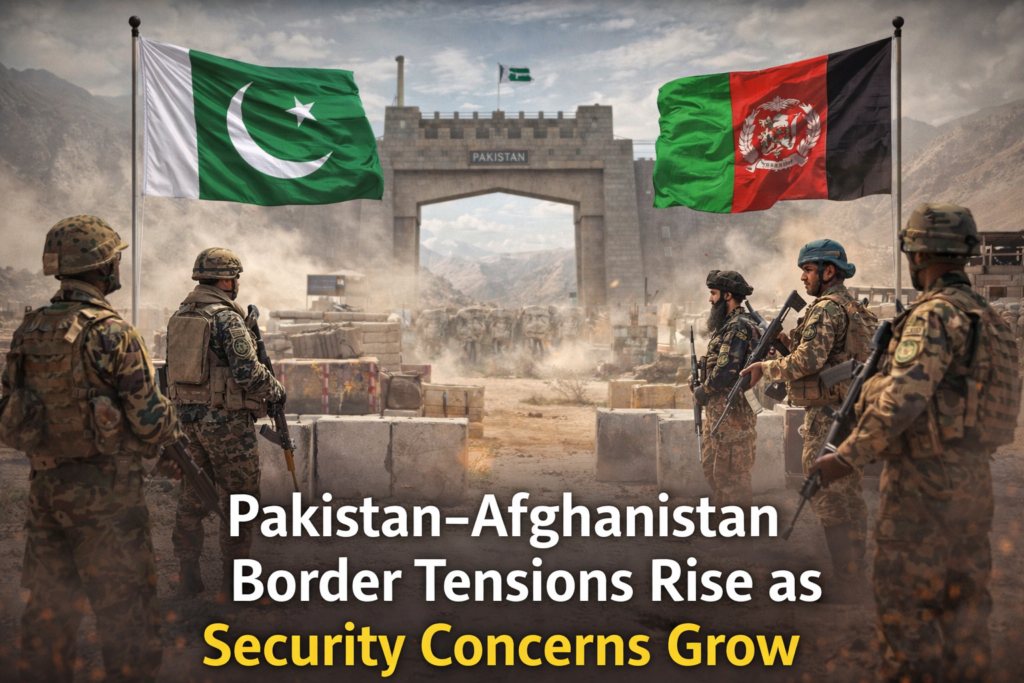
Tensions between Pakistan and Afghanistan have attracted international attention recently following reports of border skirmishes, diplomatic disagreements and security concerns. Although there has been no official declaration of war between the two neighboring countries, the situation on their shared border has become tense, raising fears of instability in the region.
Both nations share a long and complex history, shaped by geography, security challenges, and political changes. Recent developments highlight how fragile relations remain and why peaceful dialogue is vital to regional peace.
Background of Pakistan–Afghanistan relations
Pakistan and Afghanistan share a more than 2,600 km long border, known as the Durand Line. This border has been a matter of dispute for decades, as Afghanistan has never formally recognized it as an international border. This disagreement has led to mistrust and periodic tensions between the two countries.
Over the years, Pakistan has played an important role in Afghan affairs, especially during conflict and political transition. Also, Pakistan has often raised concerns about terrorist groups using Afghan territory to carry out cross-border attacks.
These unresolved issues have made the relationship sensitive and sometimes unpredictable.
What caused the recent tension?
In recent weeks, there have been reports of armed incidents near the border areas, including shootings and military activities. Pakistan has said that its action is aimed at preventing cross-border attacks and protecting its citizens. Meanwhile, Afghan officials have accused Pakistan of violating their sovereignty.
According to local sources, there have been casualties on both sides in separate incidents, although official numbers are limited. Border crossings are sometimes closed, disrupting trade and movement for citizens who depend on cross-border travel for work and family ties.
Despite strong statements from both governments, neither side has announced a full-scale military operation.
Impact on civilians and border communities
As with many regional tensions, civilians are most affected. People living near the Pakistan-Afghanistan border often face uncertainty, economic losses and security concerns. Traders experience delays due to border closures, while families are separated when crossings are closed without notice.
Humanitarian organizations have expressed concern about displaced families and limited access to essential services in remote areas. Local residents often express a desire for stability, saying that the conflict further increases poverty and insecurity in an already fragile region.
The situation has also affected regional trade routes, which are vital to Afghanistan’s economy and vital to Pakistan’s regional connectivity plans.
Regional and international response
The international community is closely monitoring the developments between Pakistan and Afghanistan. Many countries and organizations have urged restraint and encouraged both sides to resolve issues through dialogue rather than force.
Stability in Afghanistan is considered vital to broader regional security, particularly in South and Central Asia. Any prolonged conflict could increase refugee flows, disrupt trade and create opportunities for extremist groups to exploit the chaos.As of now, diplomatic channels are open, and there have been signs of backdoor communication to prevent further escalation.
Diplomatic challenges and possible solutions
Experts believe that restoring trust in Pakistan-Afghanistan relations is the biggest challenge. Security concerns, border management and political recognition are deeply interconnected and cannot be resolved overnight.
Better border coordination, regular communication between military officials and economic cooperation are seen as important steps towards reducing tensions. Trade agreements and infrastructure projects can help build mutual dependence and reduce hostilities.
Dialogue involving regional partners can also help create a more stable and cooperative environment.
Conclusion
Although media headlines may use strong words such as “war”, the current situation between Pakistan and Afghanistan is better described as a period of heightened tension rather than active war. It appears that both countries are aware of the serious consequences of a major conflict.
For now, restraint, diplomacy and cooperation remain the most realistic way forward. The coming months will be important in deciding whether relations will improve or deteriorate further. For millions of people on both sides of the border, peace and stability are not political goals but daily necessities.