
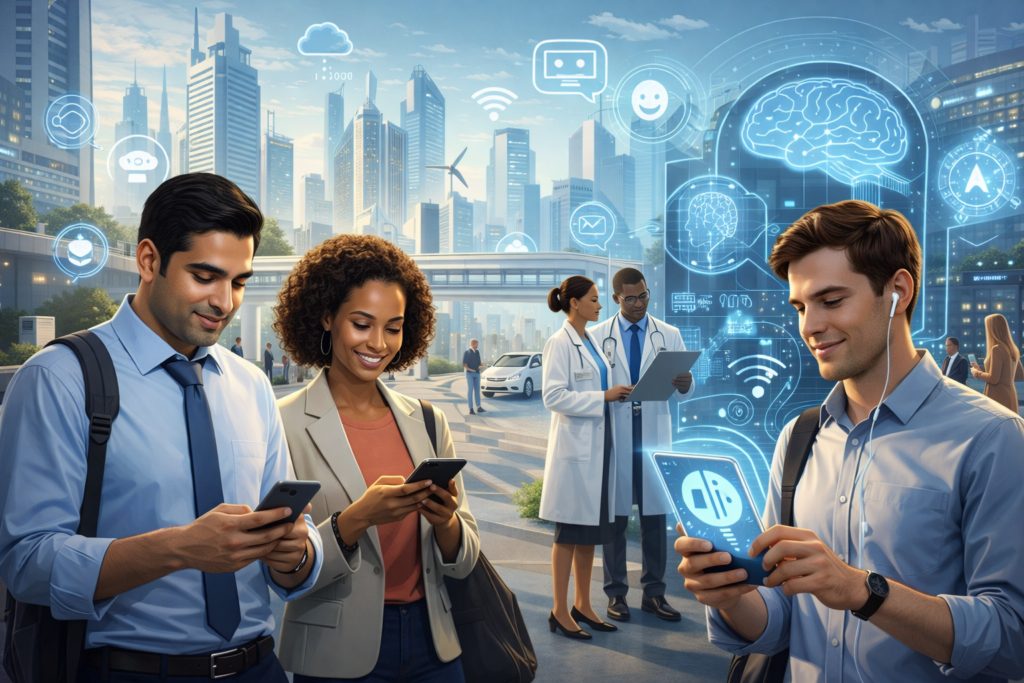
Artificial Intelligence, once associated primarily with science fiction and advanced research laboratories, has now become an invisible part of daily life for millions of people around the world. From smartphones and online shopping to healthcare and transportation, AI-powered systems are influencing the way decisions are made, services delivered, and time managed.
What makes this shift remarkable is not just the speed of adoption, but how seamlessly AI tools are being integrated into normal routines. In many cases, users actively interact with artificial intelligence without realizing it.
How AI Is Entering Daily Activities
One of the most noticeable changes is in digital services. Streaming platforms recommend movies and music based on viewing habits, while navigation apps adjust routes in real time using traffic data. Online customer support systems are increasingly relying on AI-powered chat tools to answer questions efficiently, reduce wait times, and improve accessibility.
In the workplace, AI-assisted software is helping employees automate repetitive tasks like scheduling, data entry, and report analysis. This allows workers to focus on creative and strategic responsibilities rather than routine processes. As a result, productivity levels have improved in many sectors without the need to work long hours.
Impact on Healthcare and Public Services
Healthcare is another sector experiencing significant change. AI-powered tools are being used to analyze medical images, aid in early detection of disease, and streamline administrative tasks. These technologies are designed to support professionals rather than replace them, reducing workload pressures and helping to improve patient care.
Public services are also benefiting from AI adoption. Cities are using intelligent systems to manage traffic flow, improve energy efficiency, and enhance public safety planning. These developments are contributing to smart urban environments that respond more effectively to the needs of the population.
Education and Learning in the AI Era
Education systems around the world are beginning to adapt to the rise of artificial intelligence. Digital learning platforms now use AI to personalize study content, track progress, and identify areas where students may need additional support. This approach allows learners to proceed at their own pace while receiving targeted guidance.
Teachers are also using AI-powered tools to reduce administrative tasks like grading and attendance tracking. This enables teachers to spend more time on lesson planning, student engagement and creative teaching methods.
Economic Opportunities and Job Evolution
While concerns about job displacement continue, experts emphasize that AI is more likely to replace roles rather than eliminate them entirely. New job categories are emerging in areas such as data analysis, AI ethics, systems management, and digital strategy.
Additionally, organizations are investing in upskilling and reskilling programs to help workers adapt to emerging demands. This focus on continuous learning reflects a broader recognition that human skills – creativity, critical thinking and emotional intelligence – remain essential in an AI-driven world.
Ethical Questions and Responsible Use
As AI becomes more influential, discussions on ethics and responsible use are gaining importance. Issues such as data privacy, algorithmic transparency and bias prevention are at the center of the ongoing debate. Governments and international organizations are working to develop guidelines that encourage innovation while protecting public trust.
Many technology companies are also setting up internal review systems to ensure their AI applications conform to ethical standards. This increased emphasis on accountability reflects a shared understanding that long-term success depends on public trust.
Global Collaboration and Regulation
Countries are increasingly recognizing the need for international cooperation in managing AI development. Cross-border cooperation helps ensure compatibility, security and fairness in systems that operate globally. These discussions aim to balance innovation with regulation while avoiding both uncontrolled expansion and excessive restrictions.
As policies evolve, the focus remains on using AI as a tool for positive impact rather than disruption.
Looking Ahead
Artificial intelligence is no longer a distant concept; It is a present reality shaping everyday experiences. As technology continues to advance, its impact is likely to extend further into homes, workplaces and public spaces.
The challenge ahead lies in guiding this transformation responsibly – ensuring that AI enhances quality of life, supports economic growth and fulfills human potential. With thoughtful implementation and global collaboration, artificial intelligence can become one of the most powerful tools for progress in the modern age.
Description: Artificial intelligence is becoming a part of everyday life worldwide, transforming work, healthcare, education, and public services.