
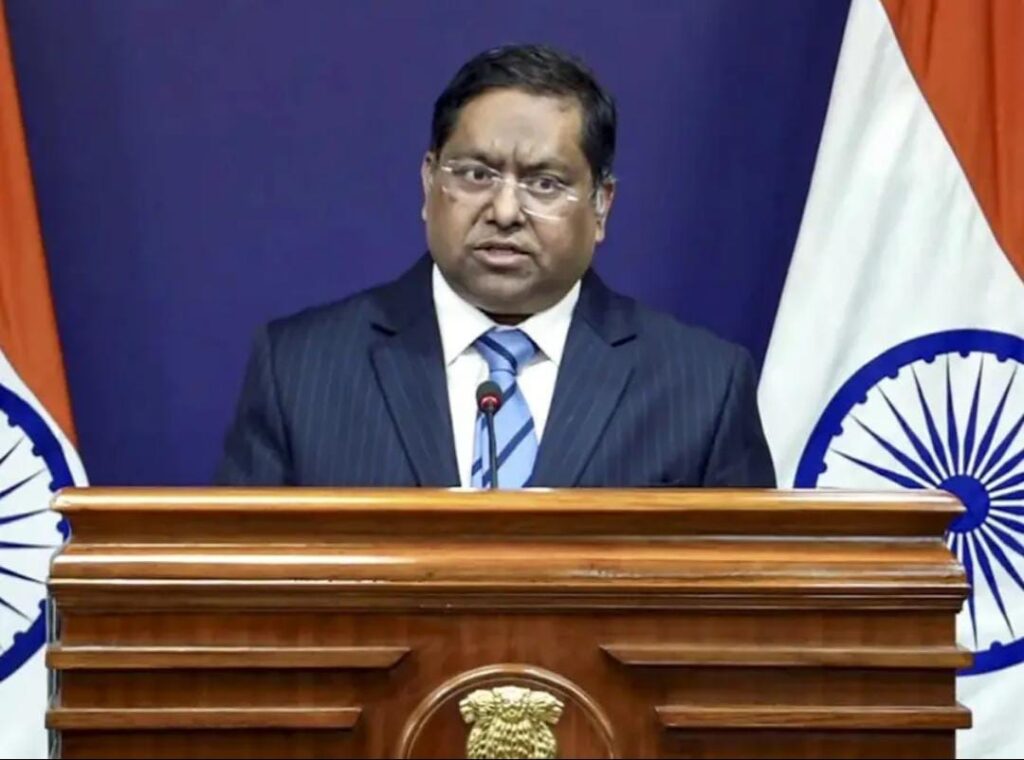
India has responded to growing concerns over its strategic and economic interests in Iran following strong statements by the United States regarding renewed unrest in the country and possible actions against Tehran. The developments have put India’s ₹4,500 crore investment in Iran’s Chabahar port under close scrutiny, drawing diplomatic engagement and official clarification from New Delhi.
The situation comes at a time of internal protests in Iran, drawing international attention and reactions from major global powers. Statements by former US President Donald Trump, warning of consequences if violence against protesters escalates, have added another layer of uncertainty to the geopolitical environment of the region. These factors together have raised questions about the sustainability of international projects operating within Iran.
Strategic Importance of Chabahar Port for India
Chabahar port holds vital strategic importance for India. Located on the southeast coast of Iran, the port provides India direct access to Afghanistan and Central Asia, bypassing Pakistan. Over the years, the project has been seen not only as an economic investment, but also as a key element of India’s regional connectivity and trade strategy.
India has invested heavily in the development of port infrastructure and operations at Chabahar. The initiative supports trade routes, promotes regional commerce and strengthens India’s diplomatic footprint in West Asia. Given its importance, any disruption caused by political instability or international sanctions is closely monitored by policymakers in New Delhi.
Concerns Arising From Iran’s Internal Situation
The recent unrest in Iran has caused global concern, with governments and international organizations closely monitoring developments on the ground. Protests, regardless of their scale, often create apprehensions among foreign investors due to the potential impact on infrastructure, security and operational continuity.
For India, the concern is not limited to immediate operational challenges but also includes long-term strategic implications. Stability in Iran is essential to ensure uninterrupted port activities, trade flows and regional connectivity initiatives related to Chabahar.
India’s Official Response and Sanctions Clarification
In response to growing speculation, India clarified that its operations at Chabahar port fall under the sanctions exemption issued by the US Treasury Department. According to official statements, this relaxation was given on October 28, 2025 and will be valid till April 26, 2026.
Indian officials stressed that the waiver allows the country to continue its participation in the port project within a clearly defined legal framework. Officials also said India is in ongoing discussions with the United States to ensure that all activities remain in line with international regulations and sanctions policies.
The purpose of this clarification is to reassure stakeholders that India’s investments are legally protected during the grace period and that diplomatic channels are open to deal with any future challenges.
Balancing Diplomacy With National Interests
India’s approach highlights its broader foreign policy strategy of balancing relationships with multiple global partners. While maintaining strong ties with the United States, India has also emphasized the importance of its independent strategic interests in the region.
Diplomatic engagement, rather than abrupt policy shifts, has been India’s preferred method in navigating complex international situations. By working within established frameworks and maintaining dialogue with all stakeholders, India seeks to protect its investments while avoiding unnecessary escalation.
Regional and Economic Implications
Any uncertainty over Chabahar will have implications beyond India and Iran. The port plays a role in regional trade networks, including access routes to landlocked countries. The disruptions could impact supply chains, infrastructure planning and long-term economic cooperation in the region.
Experts note that infrastructure projects of this scale are often designed with a long-term view, meaning that short-term political developments do not always bring immediate change. However, continued volatility could impact timelines, costs and future expansion plans.
Global Reactions and Investor Sentiment
International investors closely watch how governments react to geopolitical risks. India’s measured response, emphasizing legality and diplomacy, is likely aimed at projecting stability and confidence. Clear communication from executives can help prevent speculation and maintain trust among partners and stakeholders.
At the same time, analysts suggest that global geopolitical shifts often require adaptive strategies. Governments involved in foreign investment must constantly reassess the risks while ensuring the protection of national interests.
The Road Ahead
As the situation in Iran evolves, India is expected to remain engaged at multiple levels – diplomatic, economic and strategic. Monitoring developments, maintaining communication with international partners and adhering to the legal framework will remain central to India’s approach.
For now, India’s position underlines its intention to protect its investments while respecting international norms. The coming months will be crucial in determining how regional stability and global diplomacy shape the future of the Chabahar port project.
Disclaimer: This article is based on publicly available information and official statements at the time of writing. Developments may change as diplomatic discussions and regional conditions evolve.