
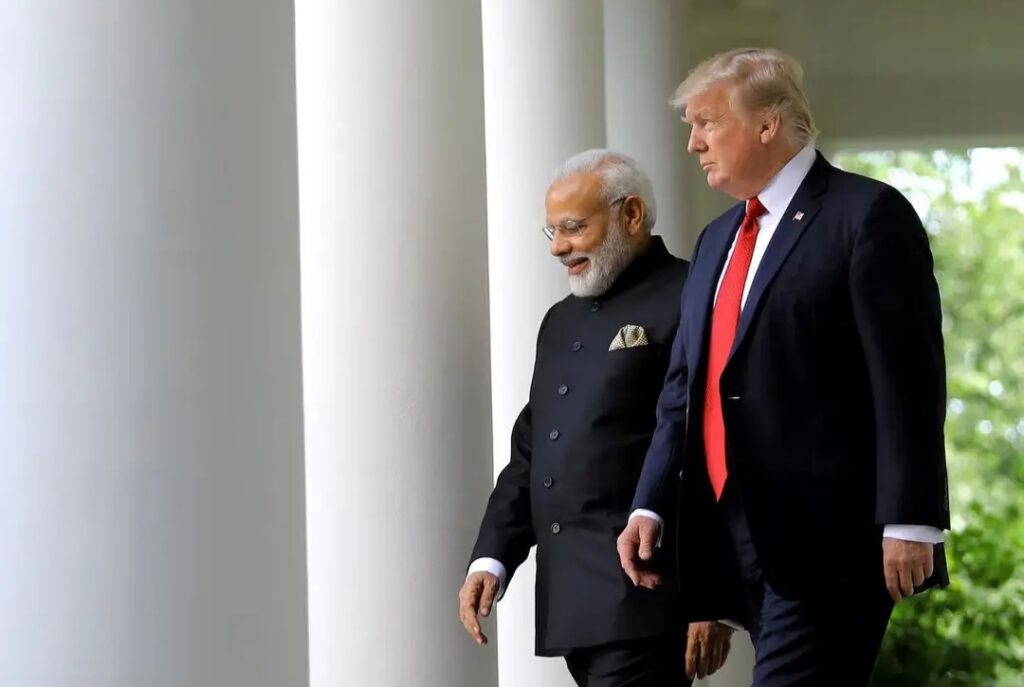
India has responded strongly diplomatically to former US President Donald Trump’s recent comments regarding the country’s oil import strategy, underscoring that energy security for its population remains the government’s top priority. The clarification came after Trump suggested that India stop buying Russian oil and instead shift its imports to countries like Venezuela, a claim that drew attention amid emerging global energy dynamics.
The Ministry of External Affairs (MEA), through its official spokesperson, emphasized that India’s energy policy is guided by practical considerations rather than political rhetoric. According to the government, ensuring affordable and uninterrupted energy supply to over 1.4 billion people is a non-negotiable objective, especially at a time when global markets remain volatile.
India’s Position on Energy Sourcing
Addressing media queries, External Affairs Ministry spokesperson Randhir Jaiswal said India continues to diversify its energy imports in line with objective market conditions and changing international circumstances. He clarified that India does not base its decisions on claims or assumptions made by foreign leaders, but follows a strategy shaped by national interest, economic stability and consumer welfare.
India’s approach to oil procurement has long included sourcing crude from multiple regions, including the Middle East, Russia, Africa and the US. This diversification helps protect the domestic economy from price shocks, supply disruptions and geopolitical uncertainties.
Context Behind the Remarks
Donald Trump’s comments came during a discussion on global oil markets and geopolitical alignments, particularly in the context of Russia’s role as a major energy exporter. From 2022 onwards, Russian crude oil has found new buyers as traditional markets in Europe have reduced imports due to sanctions. Like many other countries, India increased purchases of subsidized Russian oil, which helped stabilize domestic fuel prices.
Indian officials have consistently maintained that such purchases are legal, transparent and in line with international norms. He also stressed that energy trade should not be viewed only through a political lens, especially for developing economies with large populations and growing energy needs.
Balancing Diplomacy and Domestic Needs
India’s response reflects a careful balancing act between maintaining strong diplomatic relations with global partners, including the United States, and protecting domestic economic interests. While India and the US share a strategic partnership in technology, defense and trade, New Delhi has reiterated that policy decisions are taken independently.
Analysts say India’s stance highlights a broader trend among emerging economies that demands strategic autonomy in foreign policy. Rather than aligning completely with any one bloc, India continues to engage with multiple partners to secure critical resources for growth and development.
Impact on Global Energy Markets
India is currently one of the world’s largest oil importers, and its sourcing decisions have a significant impact on global energy flows. By maintaining purchasing flexibility, India contributes to market stability while ensuring competitive pricing. Experts suggest that a sudden move away from a single supplier is unlikely unless it is driven by obvious economic or supply-related factors.
The government’s emphasis on diversification also reflects lessons learned from past disruptions, where over-reliance on limited sources led economies to face sharp price increases and shortages.
Domestic Perspective
From a domestic perspective, affordable energy remains central to controlling inflation, supporting industrial production, and ensuring access to transportation and electricity. Fuel prices directly affect household budgets, agricultural activity and manufacturing costs, making energy policy a sensitive issue for policymakers.
By reaffirming its commitment to energy security, the government aims to reassure citizens and investors that India’s economic plan remains stable despite external observations or geopolitical shifts.
Looking Ahead
As global energy markets continue to adjust to geopolitical changes, India is expected to maintain its strategy of diversified sourcing, long-term contracts and spot market purchases. Diplomatic engagement with all major energy producers is likely to continue, along with efforts to expand renewable energy capacity to reduce long-term dependence on fossil fuels.
The recent clarification from the Ministry of External Affairs serves as a reminder that although global leaders can offer interpretations of India’s policies, the country’s decisions remain based on national priorities. For India, energy security is not a matter of political alignment, but a fundamental requirement to sustain growth and development in an uncertain global environment.
India has clarified its position on oil imports after former US President Donald Trump’s remarks, reiterating that energy security for its 1.4 billion citizens remains the government’s top priority amid evolving global market conditions.