
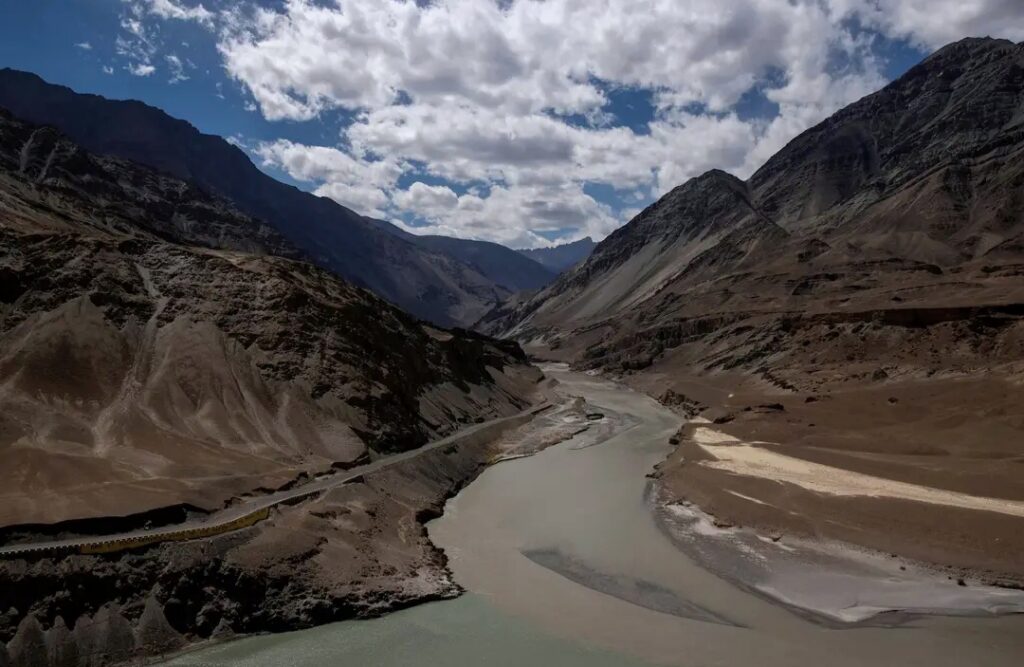
Tensions between India and Pakistan have once again come into the international spotlight following Pakistan’s comments at the UN regarding the Indus Water Treaty (IWT), a decades-old water-sharing agreement that has long been considered one of the most flexible diplomatic arrangements between the two neighbours. Pakistan has warned of a serious water crisis, attributing its concerns to recent developments related to India’s position on the treaty.
Speaking at a global policy discussion focused on water security, Pakistan’s representative to the United Nations expressed fears over downstream water availability and the wider impact on Pakistan’s agriculture, economy and civilian life. The comments have sparked fresh debate over the future of the Indus Water Treaty and its role in maintaining regional stability in South Asia.
Background of the Indus Waters Treaty
Signed in 1960 with the assistance of the World Bank, the Indus Water Treaty regulates the use and distribution of water from the Indus River system, which flows through both India and Pakistan. The agreement allocates the eastern rivers primarily to India and the western rivers primarily to Pakistan, while allowing limited and regulated use by both sides. Over the decades, the treaty has survived wars, political standoffs and diplomatic breakdowns, often being cited as an example of successful water diplomacy.
The waters of the Indus Basin are vital to millions of people in Pakistan, supporting agriculture, drinking water supply, and hydroelectric power generation. Any uncertainty regarding the treaty would therefore have significant social and economic implications.
Pakistan’s Concerns at the UN
At the UN forum, Pakistan highlighted that it sees increasing threats to water security, and said reduced predictability in river flows could affect food production and livelihoods. Officials stressed that water should not become a tool of political pressure and urged the international community to recognize water access as a humanitarian issue rather than a geopolitical instrument.
Pakistan’s statements framed the issue as part of a broader global challenge, saying climate change, glacial melt and population growth are already placing extreme pressure on water systems across South Asia. According to Pakistani representatives, additional uncertainty over the treaty mechanism could worsen an already delicate situation.
India’s Position and Broader Context
India has consistently maintained that it operates within the framework of the Indus Waters Treaty and its infrastructure projects are in line with treaty provisions. Indian officials have previously said that water management decisions are guided by domestic needs, environmental considerations and legal obligations under international agreements.
While diplomatic tensions between the two countries have periodically spilled over into discussions on trade, travel and security, India has historically avoided formally exiting the treaty. Analysts say India views the IWT not only as a bilateral agreement but also as an internationally observed framework that enhances its global credibility.
Recent geopolitical developments, including security concerns and cross-border incidents, have contributed to sharp rhetoric from both sides. However, experts caution against interpreting political statements as immediate policy changes, and stress that formal treaty mechanisms will remain in place until changes are officially made.
International Reactions and Expert Views
Global water policy experts monitoring the situation have called for restraint and dialogue. Many argue that undermining established water-sharing agreements could set a troubling precedent around the world, especially in areas where rivers cross political boundaries.
The World Bank, which played a key role in advancing the original treaty, has historically encouraged dispute resolution through technical consultation rather than political confrontation. Environmental researchers also emphasize that collaboration is essential as climate variability increases the frequency of floods and droughts in the Indus Basin.
What Lies Ahead
For now, the Indus Waters Treaty exists as a legal framework, even as political rhetoric around it has intensified. Observers believe that continued diplomatic engagement, transparency in water data and adherence to treaty procedures are key to deescalating tensions.
As water scarcity becomes a growing global concern, the situation highlights how shared natural resources can either deepen divisions or encourage cooperation. The coming months could prove crucial in determining whether antitrust negotiations in one of the world’s most strategically important river systems will survive.
description:Pakistan highlights water security concerns at the UN, renewing focus on the Indus Waters Treaty and regional stability in South Asia.