
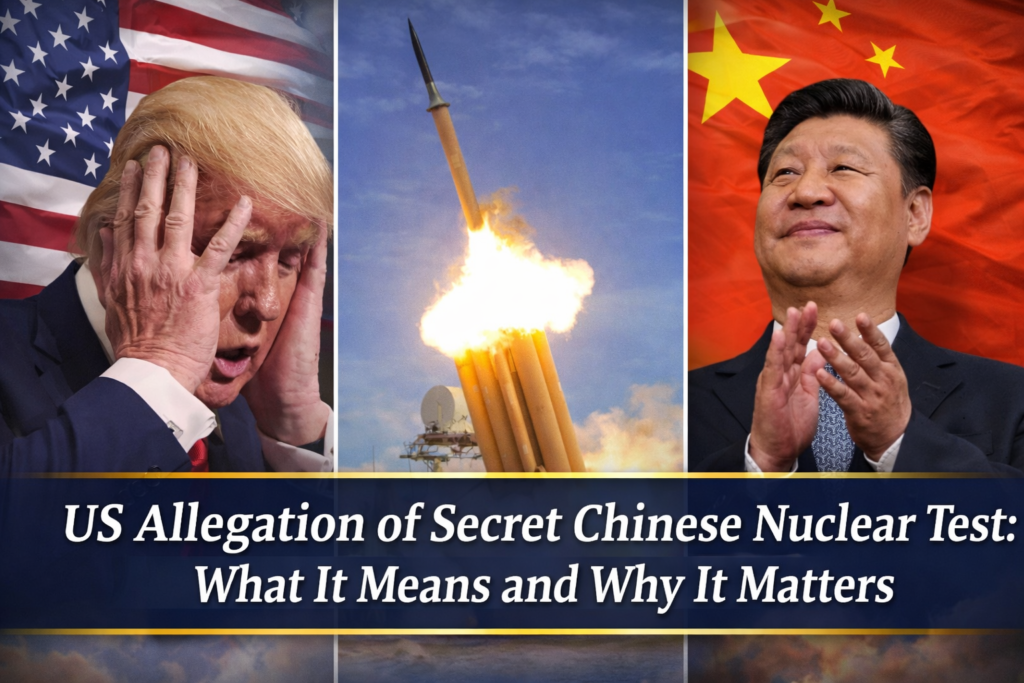
A fresh geopolitical debate has reignited after reports that the United States alleged that China conducted a secret nuclear-related test in June 2020, just days after the deadly clash in the Galwan Valley between Indian and Chinese troops. While Beijing has strongly denied the claim, the allegation has reignited discussions about nuclear transparency, regional security in Asia and the delicate balance of power between major global players.
According to the US narrative, the alleged test took place on June 22, 2020 at a time when tensions between India and China were at their peak following the Galwan incident. The clash, which resulted in casualties on both sides, became one of the most serious military confrontations along the Line of Actual Control in decades. Against this backdrop, the US claim adds a strategic dimension to an already complex episode in Asian geopolitics.
What Exactly Is Being Alleged?
The US claim does not suggest a full-scale nuclear weapon detonation but rather points to low-yield or experimental nuclear-related testing. If such tests are conducted, they are believed to fall into a gray area under international surveillance systems, making them difficult to detect conclusively. Washington has argued that these activities raise concerns about China’s commitment to global arms control norms and transparency.
However, China has categorically rejected the allegation, calling it “baseless” and politically motivated. Chinese officials say the country strictly adheres to its international obligations and has maintained a moratorium on nuclear testing. Beijing has also accused the US of using unverified intelligence to justify its strategic agenda.
Why This Matters Now
The time is important for a renewed focus on this allegation. The expiration of the New START treaty, a key arms control agreement between the US and Russia, has left a void in global nuclear governance. Washington is advocating for trilateral arms control talks involving China and Russia, arguing that China’s rapidly growing nuclear arsenal should be part of any future framework.
China, on the other hand, has consistently resisted such calls, stating that its nuclear stockpile is much smaller than that of the US or Russia and therefore does not need to be included under equal terms. The resurgence of the 2020 allegation appears to be part of a broader diplomatic effort to pressure Beijing for talks.
Implications for India and the Region
For India, this issue has indirect but important implications. The Galwan clash fundamentally changed India’s strategic perception towards China, leading to strengthened border infrastructure, tighter scrutiny of Chinese investments and deeper defense cooperation with partners like the US. Any suggestion of post-conflict nuclear escalation or covert testing inevitably raises concerns about regional stability.
That said, Indian officials have largely avoided commenting publicly on the US allegation. Strategic experts say India relies on its own intelligence assessments rather than external claims, especially on sensitive matters such as nuclear capabilities.
Transparency Versus Trust Deficit
At the core of the issue is a growing lack of trust between the major powers. The US argues that transparency is necessary to prevent miscalculation, especially in areas where conventional conflicts could rapidly escalate. China says demands for selective transparency are often used as political tools rather than genuine confidence-building measures.
Independent analysts also caution against drawing firm conclusions without verifiable evidence. Allegations of nuclear testing are among the most serious claims in international relations, and misinterpretation can have long-term diplomatic consequences.
The Bigger Global Picture
Beyond Asia, the controversy highlights the fragile state of global arms control. With traditional treaties weakening and new technologies emerging, the risk of misunderstanding has increased. Allegations, denials, and counter-accusations now play out not only in diplomatic channels but also through media narratives that shape public opinion worldwide.
For readers, especially those following global affairs closely, this episode serves as a reminder of how historical events, such as the Galwan clash, continue to influence present-day strategic discourse.
Conclusion
Description:US allegations that China conducted a secret nuclear-related test after the 2020 Galwan clash have reignited debates on transparency, arms control, and Asian security. Here’s what the claims mean and why they matter.