
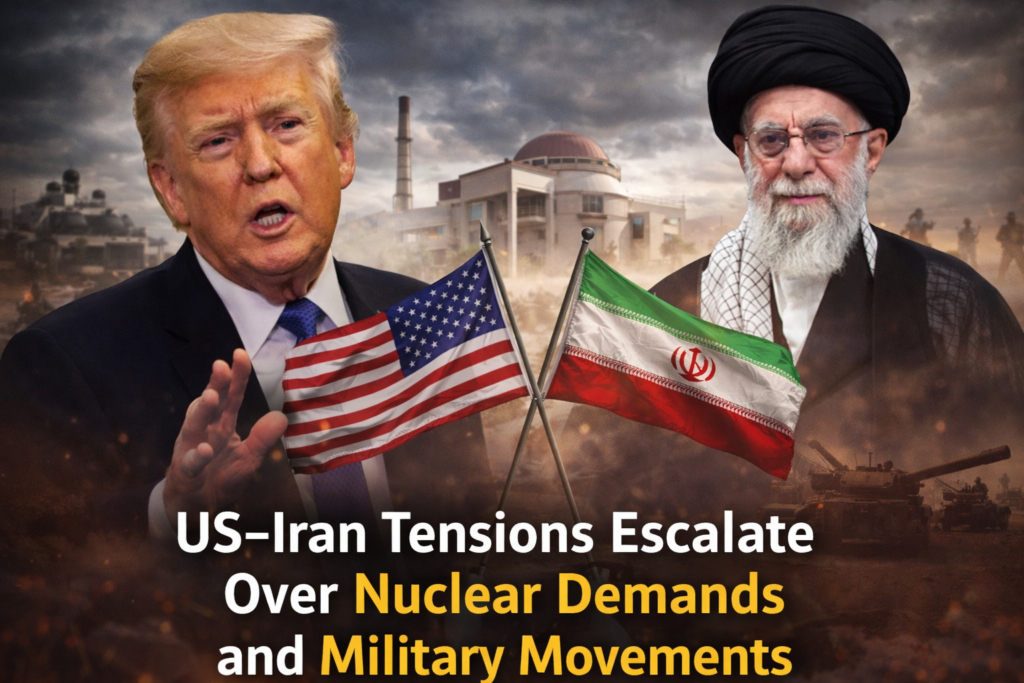
Recent developments in US-Iran relations have once again brought nuclear diplomacy into the global spotlight. According to recent international reports, the United States has asked Iran to shut down its three major nuclear facilities and hand over its enriched uranium reserves as part of renewed nuclear discussions. The talks reportedly took place in Geneva and come at a time when military activity is also increasing in the Middle East.
The issue is sensitive, complex and world powers are closely monitoring it, as any wrong move can affect regional stability and global security.
What is the United States asking?
Sources familiar with the discussions say US officials have put strong demands on the table. The reported request includes dismantling major nuclear sites and transferring remaining enriched uranium out of Iran. From Washington’s perspective, these steps are meant to ensure that Iran’s nuclear program remains entirely peaceful.
Former US President Donald Trump, who has taken a tough stance on Iran in the past, is said to be closely monitoring these developments. Reports suggest that the US leadership is under pressure to prevent any possibility of nuclear weapons development in the region.
The United States has consistently argued that strict controls are necessary to avoid future security threats not only to the Middle East but to the wider world.
Iran’s situation and concern
sIran, on the other hand, has long said its nuclear program is for civilian purposes such as energy production and medical research. Iranian leaders have repeatedly said they will not accept what they consider unreasonable or unilateral demands.
Iran’s supreme leader Ali Khamenei had earlier warned against foreign pressure, saying Iran would defend its national interests. For Tehran, closing major nuclear sites could be seen as a major loss of technological progress and political gains.
Iranian officials also point to past agreements, arguing that their compliance was not always met with promised sanctions relief, leading to deep mistrust.
Tension increased due to military activities
Adding another layer of concern, reports indicate that the US has increased its military presence in parts of West Asia. Although officials say that this gathering is to show deterrence and readiness, but it has increased the possibility of tension increasing.
Military analysts believe that even limited attacks or miscalculations could quickly escalate into a wider conflict. This is why many global leaders are urging restraint and renewed diplomatic efforts instead of an aggressive stance.
Why do these things matter to the world?
The results of these discussions will not affect only America and Iran. Countries in Europe, Asia and the Middle East are keeping a close eye. Failure of the talks could send oil prices soaring, increase regional instability and lead to renewed sanctions that would hit global trade.
On the other hand, a successful agreement could help ease tensions, reopen diplomatic channels and bring some stability to a region that has seen years of conflict.
International organizations and neutral countries have also called for transparency and patience, stressing that long-term peace can only be achieved through dialogue.
A delicate path ahead
Experts say that the road ahead will not be easy. Trust remains low between Washington and Tehran, and domestic political pressures on both sides complicate negotiations. However, diplomacy is the only realistic option to avoid conflict.
For now, the world is waiting to see whether cool heads will prevail or whether these latest demands will push relations into a more dangerous phase. What happens next could shape Middle East politics for years to come.
As history shows, nuclear diplomacy is rarely simple – but its success or failure often has global consequences beyond the negotiating table.